



Core thickness is one of the few paddle specifications that changes how a paddle plays before you account for weight, shape or face material. It is also the number most often misread.
What the Number Measures
14mm and 16mm refer to the core, not the finished paddle. The face material and the paint or print layer sit on top of that core, so a finished paddle measures slightly more than its stated core figure. When you compare two paddles, confirm that both numbers describe the same thing before drawing conclusions from a one-millimetre difference.
What a 14mm Core Does
- The ball leaves the face sooner, so returns feel quicker and more direct.
- More energy comes back off the paddle, which helps drives, serves and put-aways.
- The trade is a smaller margin on off-centre contact, so mishits lose more pace.
- Suits players who already generate their own control and want pace on demand.
What a 16mm Core Does
- The ball stays on the face marginally longer, which helps shape a shot rather than simply return it.
- Off-centre contact holds together better, so results are steadier across a long session.
- Blocks, dinks and resets at the kitchen line are easier to keep low.
- The trade is less free pace, so power comes more from the swing than the paddle.
Side by Side
| 14mm core | 16mm core | |
|---|---|---|
| Feel | Quick, direct | Softer, longer contact |
| Strength | Pace and attacking shots | Control, resets, touch |
| Off-centre contact | Less forgiving | More forgiving |
| Impact sound | Higher pitched | Lower pitched |
| Typical fit | Attacking singles, experienced players | Doubles, mixed-ability groups, beginners |
Choosing for a Group Rather Than One Player
Buying for a club, a school programme or a rental fleet is a different problem from buying for yourself. A single player can adapt to a thinner core; a mixed group cannot. Where players vary in level, or where paddles are shared between sessions, 16mm keeps results more consistent and produces fewer complaints about mishits.
Noise is worth weighing here too. A thicker core lowers the pitch of the impact, which matters on courts with noise restrictions. A foam core lowers it further.
What Core Thickness Will Not Fix
- Grip size and handle length affect comfort and two-handed shots far more than one millimetre of core.
- Face material sets spin potential. A thicker core does not add grip to a smooth surface.
- Total weight and balance decide whether a paddle feels fast in the hand.
Treat thickness as one of four decisions, alongside shape, weight and face material, rather than the specification that settles the choice.
Where This Sits in Our Range
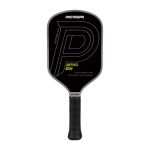
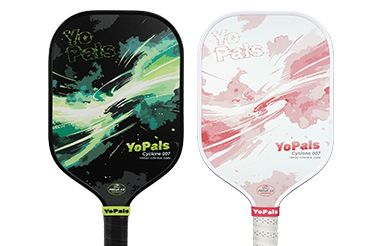
Most models are built on a 16mm core, which suits the wholesale, club and programme buying that makes up the majority of our volume. The elongated Apex Pro platform is the 14mm build, aimed at players who want a faster response and are willing to accept a tighter margin for error.