



Choosing your first pickleball paddle can be confusing. There are so many options, and every paddle seems to promise more power, better control, bigger spin, or professional-level performance.
But here is the truth: the best pickleball paddle for beginners is not always the most expensive paddle. It is the paddle that helps you learn the game faster, control the ball better, and feel comfortable every time you play.
If you are new to pickleball, your first paddle should make the game easier, not harder. You do not need an advanced paddle with too much pop, a very narrow sweet spot, or a handle that does not fit your hand. You need a paddle that is forgiving, balanced, comfortable, and easy to control.
This guide will help you understand what beginner players should look for before buying a pickleball paddle.
Quick Answer: What Is the Best Pickleball Paddle for Beginners?
The best pickleball paddle for beginners is usually a midweight, control-friendly paddle with a comfortable grip and a forgiving sweet spot.
For most new players, the safest beginner paddle should have:
| Feature | Beginner-Friendly Choice |
|---|---|
| Weight | Midweight, usually easy to swing but still stable |
| Shape | Widebody or standard shape for a larger sweet spot |
| Thickness | Control-friendly feel, often thicker rather than very thin |
| Grip | Comfortable grip that does not feel too small or too bulky |
| Surface | Smooth, stable, and easy to control |
| Play Style | Control or all-court performance |
A beginner paddle should help you keep more balls in play, learn basic shots, and build confidence.
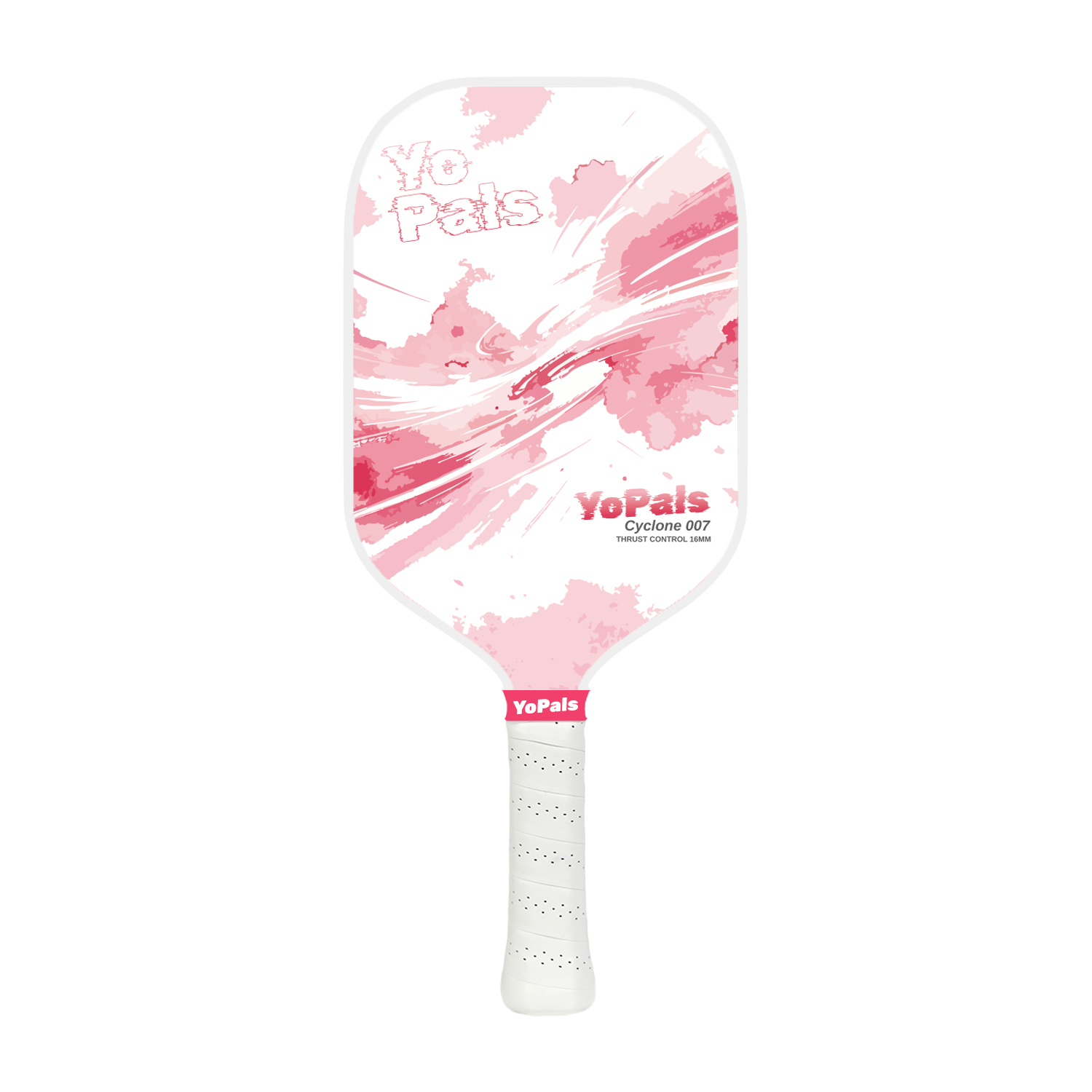
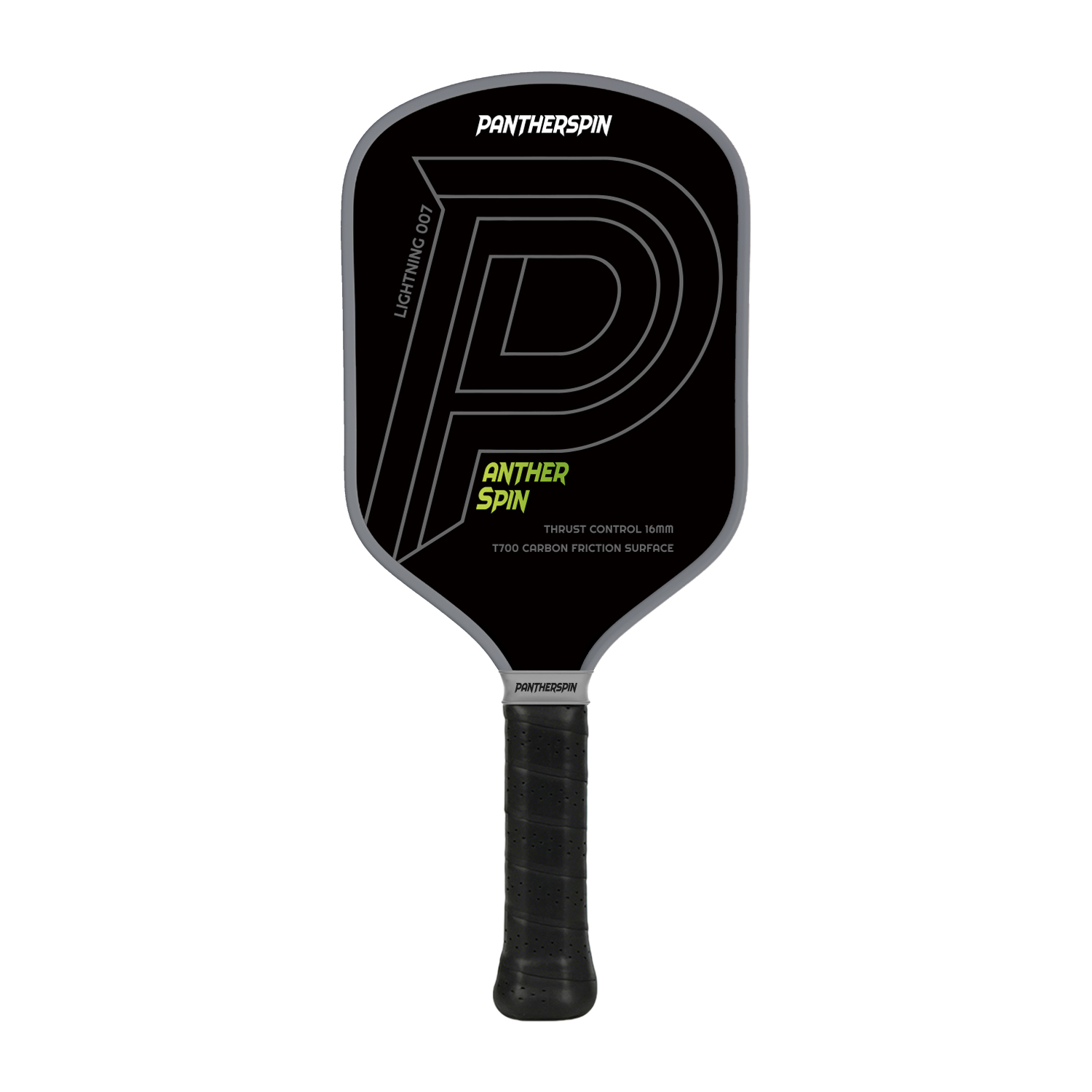
If you are just starting, Yopals Pickleball Paddles are a good fit for comfort, control, and everyday play. If you already have tennis, badminton, or table tennis experience and want more spin or attacking performance, PANTHERSPIN Pickleball Paddles may also be worth considering.
Why Beginners Need the Right Paddle
Many beginners make the mistake of buying a paddle only because it looks powerful or because advanced players recommend it. But new players usually need different things from experienced players.
When you are learning pickleball, your main goals are:
Keep the ball in play
Learn basic control
Improve your serve and return
Get comfortable at the kitchen line
Develop dinks, blocks, and resets
Avoid unnecessary arm fatigue
Build confidence during rallies
A paddle that is too powerful may cause the ball to fly long.
A paddle that is too heavy may make your arm tired.
A paddle with a small sweet spot may make off-center hits feel unstable.
A grip that does not fit your hand may make the paddle uncomfortable.
That is why beginner players should focus on control, comfort, and forgiveness first.
What Should Beginners Look for in a Pickleball Paddle?
1. A Forgiving Sweet Spot
The sweet spot is the area on the paddle face where the ball feels best when you hit it. A larger sweet spot makes the paddle more forgiving.
This is very important for beginners because new players do not always hit the ball perfectly in the center of the paddle.
A forgiving paddle helps with:
More consistent contact
Better control on off-center hits
More confidence during rallies
Easier returns
More stable blocks
For beginners, a widebody or standard-shaped paddle is usually easier to use than a very narrow elongated paddle.
2. Comfortable Weight
Pickleball paddle weight affects power, control, hand speed, and comfort.
Most beginners should avoid paddles that feel too heavy or too light.
| Paddle Type | Best For | Beginner Advice |
|---|---|---|
| Lightweight | Fast hands, easy swing | Good for players worried about arm fatigue |
| Midweight | Balance of control and power | Best choice for most beginners |
| Heavyweight | More power and stability | Usually not ideal for complete beginners |
A midweight paddle is usually the best starting point because it gives you enough stability without feeling too tiring.
If your paddle feels heavy after a few games, it may slow your reaction time and make your arm tired. If it feels too light, you may lose stability when returning harder shots.
3. Control Before Power
Beginners often think they need a powerful paddle. But in pickleball, control is usually more important when you are learning.
A control-friendly paddle helps you:
Place the ball more accurately
Learn dinks and drops
Return serves with more consistency
Keep the ball from flying long
Feel more confident at the kitchen line
Power becomes more useful after you already understand placement, timing, footwork, and shot selection.
For most beginners, the better question is not:
Which paddle hits the hardest?
The better question is:
Which paddle helps me make fewer mistakes?
That is why Yopals is positioned as a strong beginner-friendly choice for players who want comfort, control, and reliable everyday performance.
4. The Right Grip Size
Grip size is one of the most overlooked parts of choosing a beginner pickleball paddle.
If the grip is too small, you may squeeze the handle too tightly.
If the grip is too large, your wrist may feel restricted.
A good grip should feel secure but relaxed.
Signs the Grip Is Too Small
The paddle twists in your hand
You squeeze too hard
Your hand gets tired quickly
You feel less stable on blocks
You need several overgrips to make it comfortable
Signs the Grip Is Too Large
You cannot wrap your fingers comfortably
The paddle feels bulky
Your wrist movement feels limited
You struggle with soft touch shots
You cannot change grip positions easily
For beginners, it is usually safer to choose a grip that feels slightly smaller rather than too large, because you can add an overgrip later.
5. Easy Handling
Beginner players need a paddle that feels easy to move.
Pickleball is fast near the kitchen line. You need quick hands for blocks, volleys, and reaction shots. If the paddle feels too slow or too head-heavy, it can make the game harder.
Easy handling helps with:
Quick reactions
Better defense
More confidence at the net
Easier control during doubles
Less arm fatigue
If you are a beginner, avoid choosing a paddle only because it has maximum power. A paddle that feels easy to control will usually help you improve faster.
6. A Paddle That Matches Your Playing Background
Not all beginners are the same.
A complete beginner who has never played racket sports may need a different paddle from someone who has played tennis, badminton, squash, or table tennis.
Complete Beginners
You should look for:
Control
Comfort
Large sweet spot
Easy handling
Forgiving feel
All-court performance
Best fit: Yopals Pickleball Paddles
Beginners with Tennis Experience
You may prefer:
More spin potential
Longer handle
More reach
Stronger drives
Better support for two-handed backhands
Best fit: PANTHERSPIN Pickleball Paddles
Recreational Players
You may want:
Comfortable grip
Balanced power and control
Durable everyday performance
Easy handling
Good value
Best fit: Yopals Pickleball Paddles
Competitive Beginners
If you are new but want to improve quickly, you may want a paddle that gives you room to grow.
Look for:
Good control
Enough spin potential
Stable feel
Comfortable grip
Not too much power too soon
Best fit: Yopals for control-first learning or PANTHERSPIN for spin-focused improvement
Best Types of Pickleball Paddles for Beginners
1. Best Overall Beginner Paddle Type
The best overall beginner paddle is an all-court paddle.
An all-court paddle gives you a balance of:
Control
Power
Comfort
Forgiveness
Easy handling
This is a great choice if you are still discovering your playing style.
You may not know yet whether you prefer dinking, driving, spinning, blocking, or attacking. An all-court paddle gives you the flexibility to learn everything.
2. Best Control Paddle for Beginners
A control paddle is ideal if you want fewer mistakes and better ball placement.
Choose a control paddle if:
You often hit the ball too far
You want to improve dinks and drops
You play mostly doubles
You want a softer, more predictable feel
You care more about consistency than power
Control paddles are especially useful for beginners because they help you learn the most important part of pickleball: keeping the ball in play.
Recommended direction:
Choose Yopals if you want a beginner-friendly paddle focused on comfort and control.
3. Best Paddle for Beginner Doubles Players
Most beginners play doubles, and doubles requires a different paddle feel from singles.
In doubles, you need:
Fast hands
Good control
Stable blocks
Soft touch
Comfortable grip
Easy resets
A beginner doubles paddle should not be too heavy or too powerful. You need something that helps you react quickly and control the ball near the kitchen line.
A balanced Yopals paddle is a strong fit for casual doubles, family games, and recreational open play.
4. Best Paddle for Beginners Who Want More Spin
Some beginners want to learn topspin, slice, and roll shots early. This is common for players coming from tennis or table tennis.
If you want more spin, look for:
Textured paddle surface
Good control
Comfortable handle
Stable contact
Enough dwell time
But remember: the paddle does not create spin by itself. Your swing path, paddle angle, and contact point still matter.
Recommended direction:
Choose PANTHERSPIN if you are a beginner with racket sports experience and want to develop spin, drives, and more aggressive shots.
5. Best Paddle for Seniors and Casual Players
Senior players and casual players often care about comfort, easy handling, and less arm fatigue.
A good beginner paddle for seniors should feel:
Comfortable
Stable
Not too heavy
Easy to swing
Forgiving on off-center hits
Gentle on the arm
Avoid paddles that feel too stiff, too heavy, or too head-heavy. A comfortable control-focused paddle is usually the better choice.
Recommended direction:
Yopals is better suited for players who want simple, reliable, comfortable everyday performance.
Beginner Paddle Comparison Table
| Player Type | Best Paddle Style | Recommended Brand Direction |
|---|---|---|
| Complete beginner | Control or all-court paddle | Yopals |
| Recreational player | Comfortable midweight paddle | Yopals |
| Family player | Forgiving paddle with easy handling | Yopals |
| Senior player | Lightweight or midweight control paddle | Yopals |
| Tennis player new to pickleball | Spin-friendly paddle with stronger response | PANTHERSPIN |
| Beginner who wants more spin | Textured all-court or spin paddle | PANTHERSPIN |
| Doubles beginner | Control paddle with fast handling | Yopals |
| Fast-improving beginner | Balanced paddle with room to grow | Yopals / PANTHERSPIN |
Should Beginners Buy Cheap Pickleball Paddles?
Cheap pickleball paddles can be fine for trying the sport once or twice. But if you plan to play regularly, a very cheap paddle may hold you back.
Very cheap paddles may have:
Less comfortable grip
Smaller sweet spot
Poorer control
Less stable feel
Shorter lifespan
Heavier construction
Less consistent response
Wooden paddles are usually not the best choice for players who want to improve. They can be heavy and less comfortable.
A good beginner paddle does not need to be expensive, but it should be comfortable, consistent, and easy to control.
For most beginners, it is better to buy a reliable entry-level paddle than to buy the cheapest possible option.
Should Beginners Buy Expensive Pickleball Paddles?
Not always.
A high-end paddle may offer better materials, spin, power, and feel. But beginners may not be able to take full advantage of those features right away.
You should consider a better paddle if:
You plan to play regularly
You already enjoy the sport
You want to improve faster
You have racket sports experience
You want better comfort and consistency
You do not need a professional-level paddle on day one. But you also should not choose a paddle that feels uncomfortable or unpredictable.
A smart beginner paddle should give you room to improve without making the game harder.
What Beginners Should Avoid
1. Avoid Paddles That Are Too Heavy
A heavy paddle may create power, but it can also slow your hands and tire your arm.
2. Avoid Paddles With Too Much Pop
Too much pop can make it harder to control the ball, especially on dinks, drops, and returns.
3. Avoid Grips That Feel Uncomfortable
If the grip does not feel right, you may squeeze too hard or lose control.
4. Avoid Buying Only Based on Looks
A good-looking paddle is not always a good beginner paddle.
5. Avoid Choosing Only What Advanced Players Use
Advanced players may use paddles that match their technique. That does not always mean those paddles are beginner-friendly.
6. Avoid Very Cheap Wooden Paddles for Regular Play
Wooden paddles can work for casual one-time use, but they are usually not ideal for players who want to improve.
Yopals vs PANTHERSPIN: Which Is Better for Beginners?
Both Yopals and PANTHERSPIN can serve beginner players, but they are designed for different needs.
Choose Yopals If You Want:
A beginner-friendly paddle
Better control
Comfortable handling
Easy everyday play
Forgiving sweet spot
Good value
A paddle for casual games and family play
Yopals is the better choice for most complete beginners.
It is ideal if you want a paddle that helps you enjoy the game, reduce mistakes, and build confidence.
Choose PANTHERSPIN If You Want:
More spin potential
More attacking performance
A paddle for faster improvement
A paddle that supports drives and rolls
Better fit for tennis or racket sport players
A more performance-focused feel
PANTHERSPIN is better for beginners who already have some racket sports background or want to develop a more aggressive playing style.
Best Beginner Paddle by Playing Goal
| Your Goal | What to Choose |
|---|---|
| I just want to start playing | Yopals beginner-friendly paddle |
| I want better control | Yopals control paddle |
| I play with family and friends | Yopals all-court paddle |
| I want to avoid arm fatigue | Lightweight or midweight Yopals paddle |
| I came from tennis | PANTHERSPIN performance paddle |
| I want to learn spin | PANTHERSPIN spin-friendly paddle |
| I play mostly doubles | Yopals control or all-court paddle |
| I want a paddle I can grow into | Yopals or PANTHERSPIN depending on style |
Beginner Pickleball Paddle Buying Checklist
Before buying your first paddle, ask yourself these questions:
1. Does the paddle feel comfortable in my hand?
2. Is it easy to swing?
3. Does it offer enough control?
4. Is the sweet spot forgiving?
5. Is the grip size comfortable?
6. Am I choosing control before power?
7. Do I play mostly singles or doubles?
8. Do I have tennis or racket sports experience?
9. Do I want a casual paddle or a performance paddle?
10. Does the paddle match my budget?
If you are unsure, start with a balanced beginner-friendly paddle. As your skills improve, you can upgrade based on what you need more of: control, spin, power, reach, or speed.
Recommended Beginner Paddle Path
If you are buying your first paddle, follow this simple path:
Step 1: Choose comfort and control first.
Step 2: Make sure the grip feels right.
Step 3: Choose a forgiving paddle shape.
Step 4: Avoid going too heavy.
Step 5: Decide whether you need spin now or later.
Step 6: Pick a paddle that matches your playing goal.
For most beginners, that means starting with Yopals.
For athletic beginners or former tennis players, PANTHERSPIN may be a better long-term choice.
Final Verdict: What Is the Best Pickleball Paddle for Beginners?
The best pickleball paddle for beginners is one that helps you play with more control, comfort, and confidence.
You do not need the most expensive paddle. You do not need the most powerful paddle. You need a paddle that makes it easier to learn the game and enjoy every rally.
For most new players, a beginner-friendly Yopals Pickleball Paddle is the best place to start. It is designed for everyday play, comfort, and control.
If you already have racket sports experience or want to develop more spin and attacking shots, a PANTHERSPIN Pickleball Paddle may be a better fit.
Start with the paddle that matches your game today, then upgrade as your skills grow.
Find your paddle. Play your game.
FAQ
What is the best pickleball paddle for a beginner?
The best pickleball paddle for a beginner is usually a control-friendly, midweight paddle with a comfortable grip and a forgiving sweet spot. Beginners should focus on comfort, control, and consistency before power.
Should beginners use a control paddle or power paddle?
Most beginners should start with a control or all-court paddle. A power paddle can be fun, but it may make it harder to keep the ball in play if your technique is still developing.
Are expensive pickleball paddles worth it for beginners?
Expensive paddles can offer better materials and performance, but beginners do not always need a professional-level paddle. A reliable beginner paddle with good comfort and control is usually the smarter first choice.
What paddle weight is best for beginners?
Most beginners do well with a paddle that feels balanced and easy to swing. Midweight paddles are usually the safest choice because they offer both control and stability.
What paddle shape is best for beginners?
Widebody or standard-shaped paddles are usually best for beginners because they often provide a larger sweet spot and more forgiveness on off-center hits.
Is a carbon fiber paddle good for beginners?
A carbon fiber paddle can be good for beginners who want more control and spin potential. However, complete beginners should focus more on comfort, forgiveness, and easy handling than material alone.
Should beginners avoid wooden pickleball paddles?
Wooden paddles can work for very casual play, but they are usually not ideal for beginners who plan to play regularly. They can feel heavy and less comfortable than modern beginner-friendly paddles.
Is Yopals good for beginner pickleball players?
Yopals is a good fit for beginner and recreational players who want comfort, control, and reliable everyday performance.
Is PANTHERSPIN good for beginners?
PANTHERSPIN is better for beginners who already have racket sports experience or want more spin, power, and performance as they improve.
How do I know when to upgrade my beginner paddle?
You may be ready to upgrade when you know your playing style better. If you want more spin, more reach, stronger drives, or better control under pressure, it may be time to move to a more specialized paddle.